Two Seasons at the Punch Bowl
The Punch Bowl on the River Quoich is a place that never looks the same twice. Standing there through different seasons makes that absolutely clear. In spring, the river fills its channel with power and noise, pushing hard through the rock and throwing up bright, lively reflections. By autumn, the same spot feels transformed. The water drops, hidden shapes emerge from the stone shelves, and the surrounding woodland softens into quieter colours.
Looking at these two contrasting views — one full of movement and force, the other calm and revealing — offers a deeper appreciation of this remarkable corner of Upper Deeside.
Spring: Facing Upstream into Fresh Light
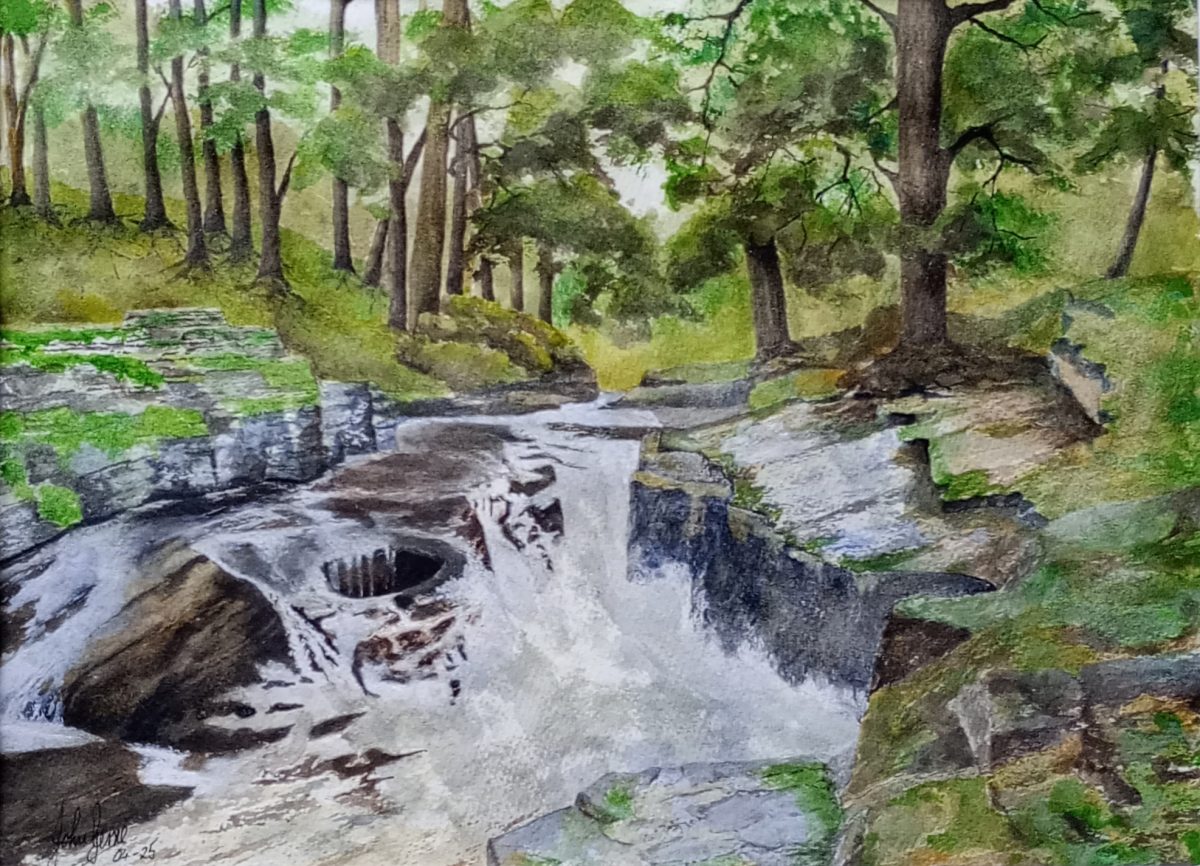
I painted the first watercolour in mid-spring, standing on the east bank and looking almost due south to north, straight up the channel. The river was running high after snowmelt; on the left the spate pushed across the rocks, while on the right the vertical stonework held the water close to the bank. That balance allowed me to keep both sides in view and use the current as a strong lead through the scene.
Spring light lifts every surface. The new greens on the ground and in the trees were bright but needed careful handling so they didn’t appear harsh. I worked with clean washes and crisp edges, picking out trunks and branches while keeping the darker tones under control. The trees on the west bank stood close together, slightly shortening the distance and making the channel feel quicker and more focused. Brushwork on the rocks stayed firm and a little dry to catch the texture, while the water was left with clear, unpainted whites to maintain its sense of energy.
The mood here is open and hopeful — the feeling of a year beginning to move again. The river sounds louder, the air is fresher, and the light seems to find every corner. Painting it, I wanted to celebrate each note: the glint on a stone, the white of a small fall, the first leaves catching the sun, all without letting any one detail take over.
Autumn: A Quieter Reach and Longer Distance
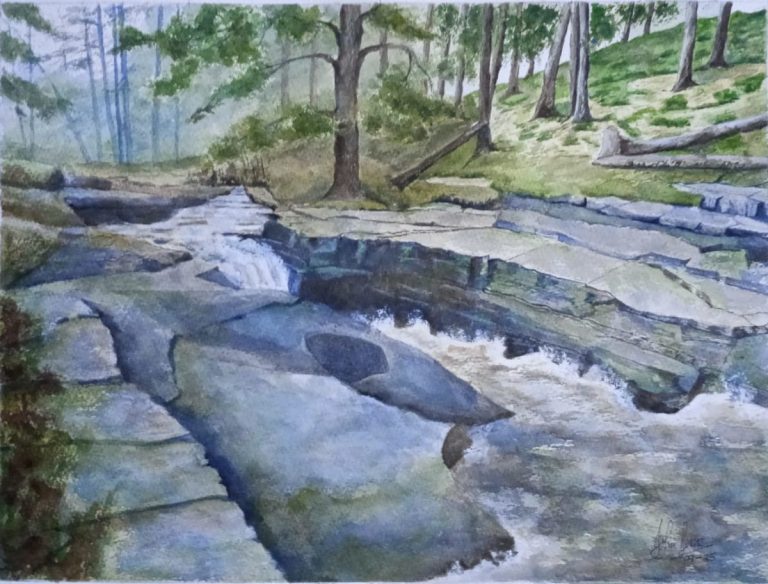
The second watercolour was made in autumn from the opposite side, on the west bank, looking south towards the north-east. From this angle the stones underfoot come forward, leading the eye deeper into the woodland. After a dry summer the colours were naturally softer — browns, mid-ochres and gentle greys — and I allowed them to drift into one another so the forms would sit quietly together.
Edges are looser in this version. I used more wet-into-wet passages to let the river breathe and allow the banks to settle into tone. Where the spring piece asks you to follow the river’s rush, this one invites you to pause and notice the lay of the stones and the space between the trees. The depth of field is stronger, the pace gentler, and the whole scene leans towards reflection.
The mood is calm and thoughtful. It marks the moment when the forest folds into its autumn palette and you become aware of how much underlying structure the place holds — the rock planes, the quieter current, and the pathways of light stretching into the distance. Painting it, I felt less need to define every edge and more drawn to the way the day’s light softened the joins.
Bringing Them Together
Both paintings show the Punch Bowl on the River Quoich on the Mar Estate beyond Braemar, yet they speak in very different voices. In spring, the view is compact and lively, with clear edges, bright washes and the river doing most of the talking. In autumn, the view opens out; the stones guide you inward, colours merge, and the story becomes one of memory and distance.
From the artist’s side of the easel, the change of bank and the change of season shape everything. The east-bank spring study favours clarity, contrast and movement. The west-bank autumn study favours harmony, tone and stillness. Seen together, they form a natural pair: one about arrival and lift, the other about settling and looking back.