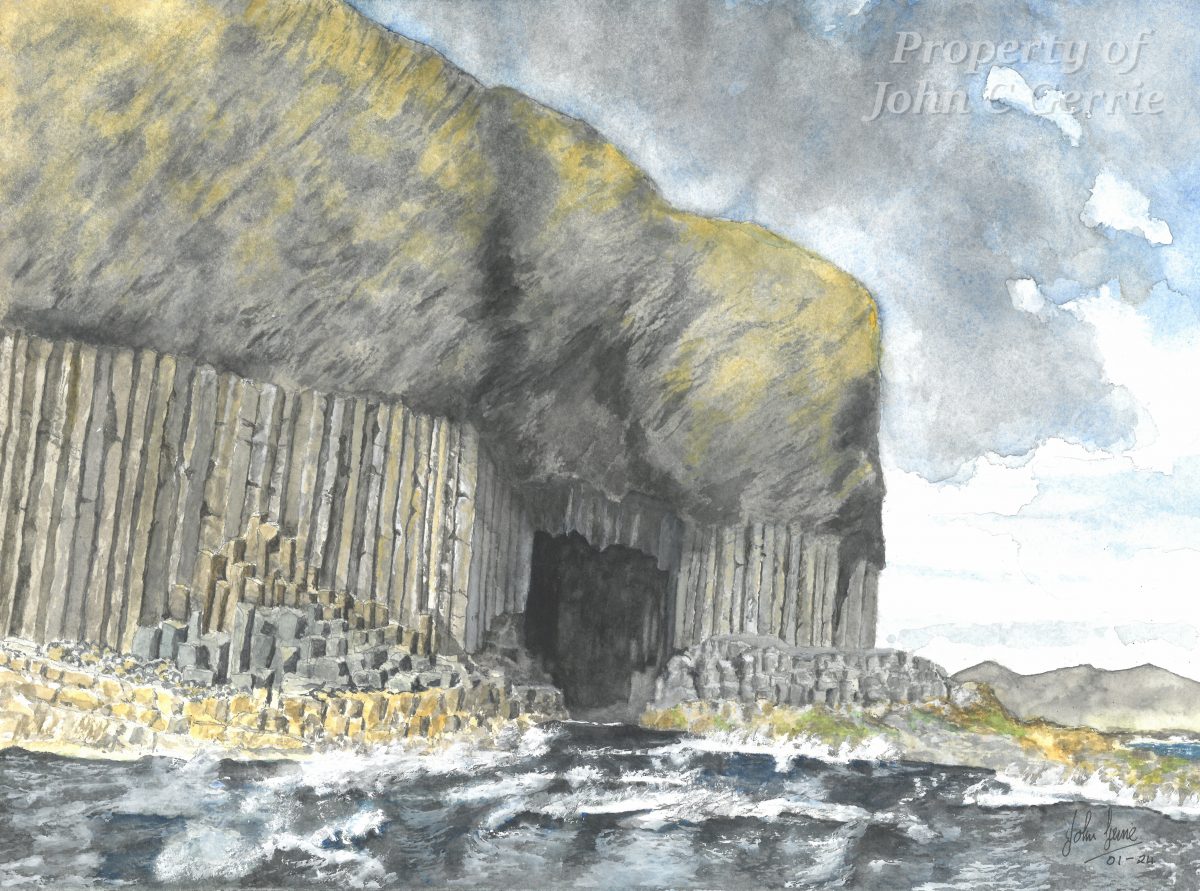
Fingal’s Cave
Price range: £10.00 through £40.00
As an Aberdeen artist, I’ve captured the majesty of Fingal’s Cave in this watercolour painting.
The precise sketching of basalt columns and the dramatic sky reflect the cave’s grandeur. The painting resonates with the cave’s unique acoustics, vibrant marine life, and rich history.
This piece is more than a Scottish seascape; it’s a personal journey into a natural wonder.
Introducing the Scottish Seascape Watercolour: Fingal’s Cave
As an Aberdonian artist, I’ve always been captivated by the Scottish seascape. One such marvel that has held my fascination since 1969 is Fingal’s Cave. My wife Alison and I first encountered this natural wonder during a holiday in Oban, on the West coast of Argyll. The calm sea and the strong sunshine that day made our visit to Staffa, the island home to the cave, a magical experience.
This enchantment with Fingal’s Cave has been a constant source of inspiration in my journey as a watercolour artist. Today, I’m thrilled to present a Scottish artwork that is the culmination of this long-held desire to paint – a watercolour rendition of Fingal’s Cave.
The Artistic Process
The sketching process demanded precision. The distinct colour of the basalt columns, neither brown nor grey but a unique blend of the two, had to be captured accurately. The lava capping, more grey in tone, was adorned with a moss of an ochre/cadmium yellow hue.
To enhance the drama of the scene, I detailed the broken columns at the sea edge in the initial sketch and added shallow waves to accentuate the wildness of the location.
For the colours, I applied five different washes over the painting surface to capture the drama of the scene. I darkened the sky to complement the theatre and strength of the surrounding sea.
Fingal’s Cave: A Blend of Nature, History, and Folklore
Fingal’s Cave, located on an uninhabited Atlantic island of Hebrides, Scotland, is a marvel of nature. The cave, primarily made of hexagonal prism basalt columns, stands 69 meters tall over the ocean. It’s renowned for its remarkable acoustics, with the reverberation of sound within the cave creating a unique auditory experience.
The cave and the island of Staffa are home to various seabirds, including puffins, razorbills, and guillemots, making it an important nesting site.
The cave’s name traces back to Gaelic mythology, named after the mythical hero Fingal (also known as Fionn mac Cumhaill), who was said to have used the cave as a refuge and resting place.
Fingal’s Cave was brought to the attention of the English-speaking world by 18th-century naturalist Sir Joseph Banks in 1772. It became known as Fingal’s Cave after the eponymous hero of an epic poem by 18th-century Scots poet-historian James Macpherson.
The cave also inspired Romantic composer Felix Mendelssohn, who visited in 1829 and wrote an overture, The Hebrides, Op. 26, (also known as Fingal’s Cave Overture), inspired by the weird echoes in the cave.
Folklore suggests Fingal was a giant who put down Staffa as a stepping stone on his way to battle another giant in Ireland. Other legends place Hell directly under Fingal’s Cave or have Finn (or Fionn) building the causeway between Ireland and Scotland.
This Scottish watercolour is more than just a painting; it’s a celebration of the awe-inspiring beauty of Fingal’s Cave and the rich tapestry of history and folklore that surrounds it.
More Seascape Prints
-
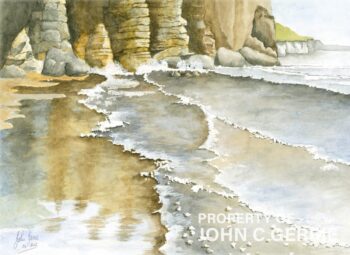
Sandstone Bay
Price range: £10.00 through £40.00Select options This product has multiple variants. The options may be chosen on the product page -
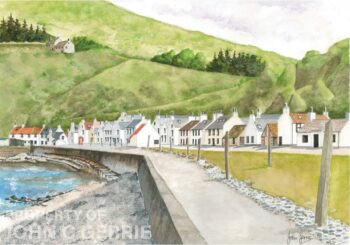
Pennan Village Around a Small Harbour
Price range: £10.00 through £40.00Select options This product has multiple variants. The options may be chosen on the product page -
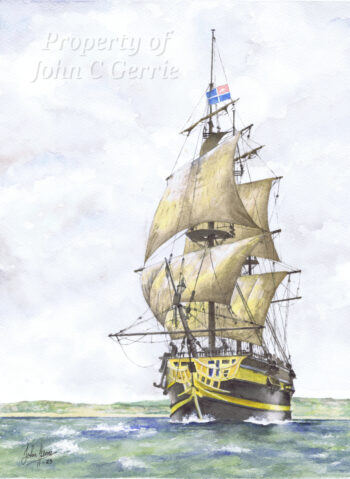
The Privateer: A Sail through History
Price range: £10.00 through £40.00Select options This product has multiple variants. The options may be chosen on the product page -
Collieston Village
Price range: £10.00 through £40.00Select options This product has multiple variants. The options may be chosen on the product page
| Medium | Card, Print, Original, Image, Commission |
|---|---|
| Size | Post Card, A6, A4, A3 |

Reviews
There are no reviews yet.